Fire Compliance: What Does My Property Actually Need?
Fire compliance can be confusing. Do you need a Fire Risk Assessment? Emergency lighting? A particular alarm system? Fire doors? Staff training? An evacuation plan? How often should everything be tested — and who is responsible for making sure it happens?
That's where Fire Check Scotland can help.
We work alongside property owners, landlords, commercial tenants, developers and businesses to understand where they are now, what applies to their premises and what needs to happen next.
You don't need to know what service to ask us for. Tell us about your property and we'll help you work out where to start.
Built by Property Owners. Supporting Property Owners. Sensible Compliance Without Unnecessary Cost.
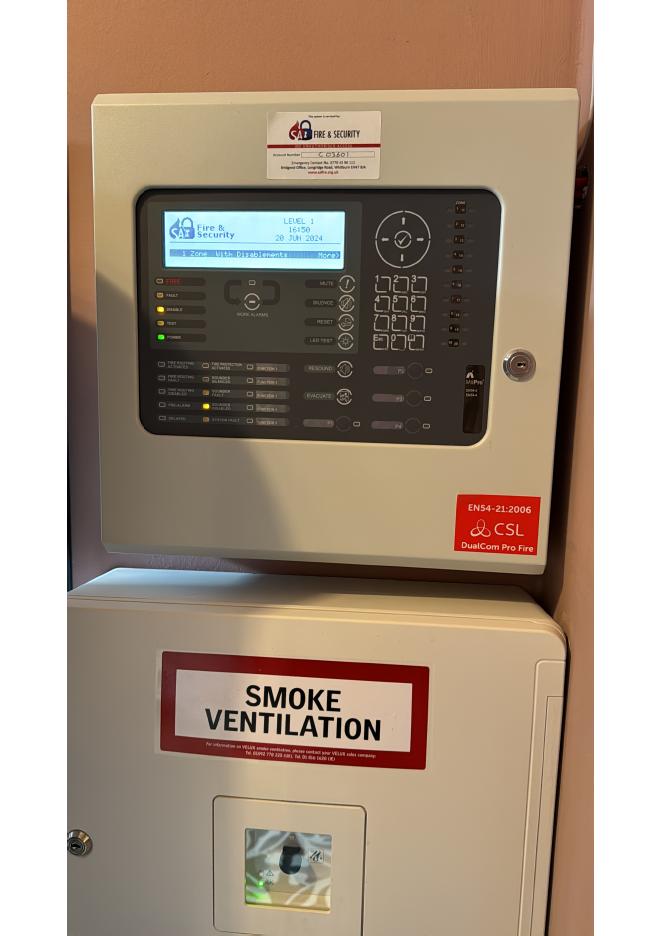
Fire compliance isn't one certificate.
The right combination depends on the premises, its use, the people at risk and how fire safety is managed. No generic checklist can guarantee compliance.
- 01Fire Risk Assessment
- 02Means of Escape
- 03Detection & Alarm
- 04Emergency Lighting
- 05Fire Doors & Compartmentation
- 06Signage
- 07Firefighting Equipment
- 08Evacuation Procedures
- 09Training & Management
- 10Testing & Maintenance
- 11Records & Evidence
- 12Regular Review
Practical Support for Different Compliance Needs
Choose the service that matches your situation. Each stands on its own.
Fire Safety Action Plan
A standalone advisory service for businesses and property owners who need to know what fire compliance looks like and what to address first.
Explore the Action Plan serviceFire Risk Assessments
A structured assessment of fire risks, existing measures and management arrangements, with clear findings and prioritised actions.
View Fire Risk AssessmentsFire Strategy Reports
Building-specific fire strategy planning for developments, conversions, refurbishments and change-of-use projects.
View Fire Strategy ReportsTwo separate legal frameworks: Scotland and England & Wales
Scotland has its own fire safety legislation. For most non-domestic premises in Scotland, duties arise under Part 3 of the Fire (Scotland) Act 2005 and the Fire Safety (Scotland) Regulations 2006. The process is not just completing a Fire Risk Assessment: appropriate measures identified through assessment must be implemented, kept under review and properly managed.
Scotland
Fire (Scotland) Act 2005 Part 3 and the Fire Safety (Scotland) Regulations 2006. Section 54 places the duty to assess fire risk and take reasonable fire safety measures on the employer, dutyholder or person with control of relevant premises. Scottish Government practical fire safety guidance differs by premises type — non-residential premises, sleeping accommodation and care homes each have their own guidance.
England & Wales
Regulatory Reform (Fire Safety) Order 2005, which places duties on the "Responsible Person". Article 9 is the broadly comparable risk-assessment duty. That Order does not apply in Scotland and did not replace Scottish fire safety law.
Because the statutory structures differ, these are closest comparable provisions rather than exact equivalents. A dedicated side-by-side guide to both frameworks is coming to our fire safety blog.
Requirements are specific to the premises. A hotel, office, restaurant, HMO and warehouse will not necessarily need identical measures.
Our advice and assessment work takes account of the jurisdiction and the premises involved; we do not apply Scottish legislation to English properties, or English legislation to Scottish ones.
This page explains how fire compliance works. If you want someone to tell you what needs doing at your premises and in what order, see the Fire Safety Action Plan. If you need the formal assessment of your current fire risks that the law requires, see Fire Risk Assessments. An Action Plan sits alongside an assessment rather than replacing it.
Related Case Studies
Multi-Unit Short-Term Let Fire Risk Assessment | Edinburgh
How a Fire Risk Assessment identified significant issues affecting the building's only escape route.
Read the case studyFire Safety Action Plan for Guest Accommodation | Edinburgh
Turning Fire Risk Assessment findings into a practical plan before a fire authority audit.
Read the case studyLatest Fire Safety Guidance
Recent articles explaining the duties, deadlines and practical detail behind fire compliance.
Real Consequences: UK Case Studies Where a Missing Fire Risk Assessment Led to Prosecution
Real prosecutions under UK fire safety law — prison sentences, six-figure fines, and the same preventable gap behind almost every one of them.
How Often Do You Need to Renew a Fire Risk Assessment?
There's no hard expiry date in law — the test is whether your assessment still reflects your premises as they are today. Here's what triggers a review, and how often to schedule one.
Serviced Accommodation and Airbnb — The Fire Safety Rules Most Hosts Don't Know Exist
Letting a property short-term puts you in a stricter fire safety category than most hosts realise — closer to a small hotel than a private home. Here's what actually applies.
Fire Compliance Questions, Answered
Not Sure What You Need? Talk to Us
Tell us about your property or business. We'll help you understand the sensible next step without expecting you to know which service to ask for.