The Most Common Fire Risk Assessment Failures
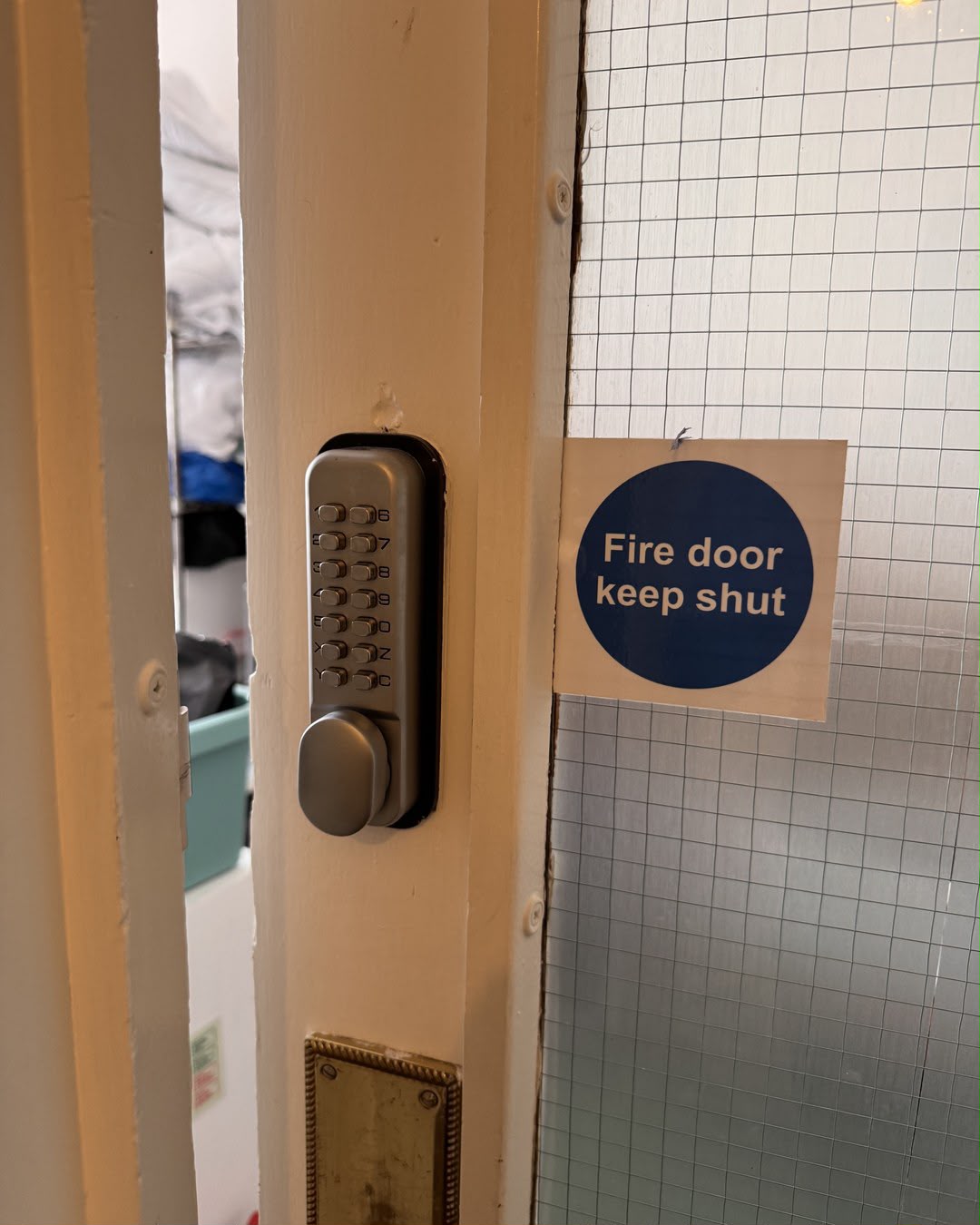
We've written before about fire doors specifically, because they're the single most common issue we find. But they're far from the only one. After enough assessments across enough different premises, a clear pattern emerges — the same handful of issues turn up again and again, regardless of the type of building.
1. Blocked or obstructed escape routes
Boxes stacked in a corridor. Stock left against a fire exit "just for today." A chair pushed in front of a door during a busy shift. None of these feel serious in the moment, but escape routes need to be clear at all times, not just when it's convenient. This is consistently one of the top issues found on site.
2. Fire doors propped open or improperly maintained
Covered in detail in our earlier post, but worth repeating here because it's genuinely the most frequent single failure across every premises type we assess.
3. Outdated or incomplete fire safety documentation
An assessment that's several years old, doesn't reflect a change of use or layout, or was never properly written down in the first place. In Scotland, recording your findings in writing is a requirement in certain circumstances — for example where you employ five or more people, where the premises are licensed, or where an alterations notice is in force — and it's good practice for everyone else. Inspectors, insurers and lenders will all expect to see it, and a surprising number of smaller premises still have nothing written down.
4. Faulty or untested fire alarm systems
Alarms that haven't been tested regularly, panels showing unresolved fault codes, or detection that doesn't cover all the areas it should. This is often missed simply because the alarm "still makes a noise" when tested casually, without anyone checking whether it's actually functioning to the standard the building requires.
5. Electrical hazards
Overloaded sockets, damaged cabling, and unmaintained electrical installations are consistently one of the leading causes of fire, and one of the most commonly flagged issues in assessments. Poor housekeeping around electrical equipment — extension leads daisy-chained together, portable heaters near flammable material — comes up repeatedly.
6. Missing or inadequate emergency lighting
Corridors and stairwells with no emergency lighting, or lighting that hasn't been tested, mean an escape route that works fine in daylight can become genuinely dangerous if the power fails during an actual fire.
7. Inadequate fire safety signage
Missing "Fire Exit" or "Fire Door Keep Shut" signage, or signage that's outdated and doesn't reflect the current layout. A small, cheap fix that gets missed constantly simply because nobody thinks to check it.
8. No staff training or fire drills
A written fire procedure that nobody's actually been trained on isn't worth much in an emergency. Inspectors want to see evidence that staff know what to do, not just that a document exists saying they should.
Why the same issues keep recurring
None of these are complicated to fix once identified. That's precisely why they're so common — they're not usually the result of negligence, they're the result of nobody having looked properly in the first place. A generic or rushed assessment misses exactly these kinds of issues, because they require someone who knows what to actually check, not just a walk-through with a clipboard.
What to do with this list
If any of the above sound familiar for your premises, it's worth having a proper look before it becomes a finding on someone else's inspection report.
If your premises are in England
The same failures turn up in England. The duty to record significant findings applies in England too, if you have five or more employees, if the premises are licensed, or if an alterations notice is in force.
Fire Check Scotland's assessments are built around catching exactly these issues before they become a problem. Get in touch to get your premises properly checked.
Where to go next
Our guide to how fire compliance works in Scotland explains the law and what it expects of you. If you already know you need a formal assessment, see fire risk assessments. If you are not sure what to tackle first, a Fire Safety Action Plan sets out the priorities for your premises.
Need clarity on your compliance position?
Speak to Fire Check Scotland for a straightforward, no-obligation conversation about your property.
Book a Fire Safety Consultation