Case Study
Tenant Office Fire Risk Assessment in Multi-Occupied Building
Tenant-demise office FRA for an upper-floor office in a multi-occupied city-centre building.
Summary
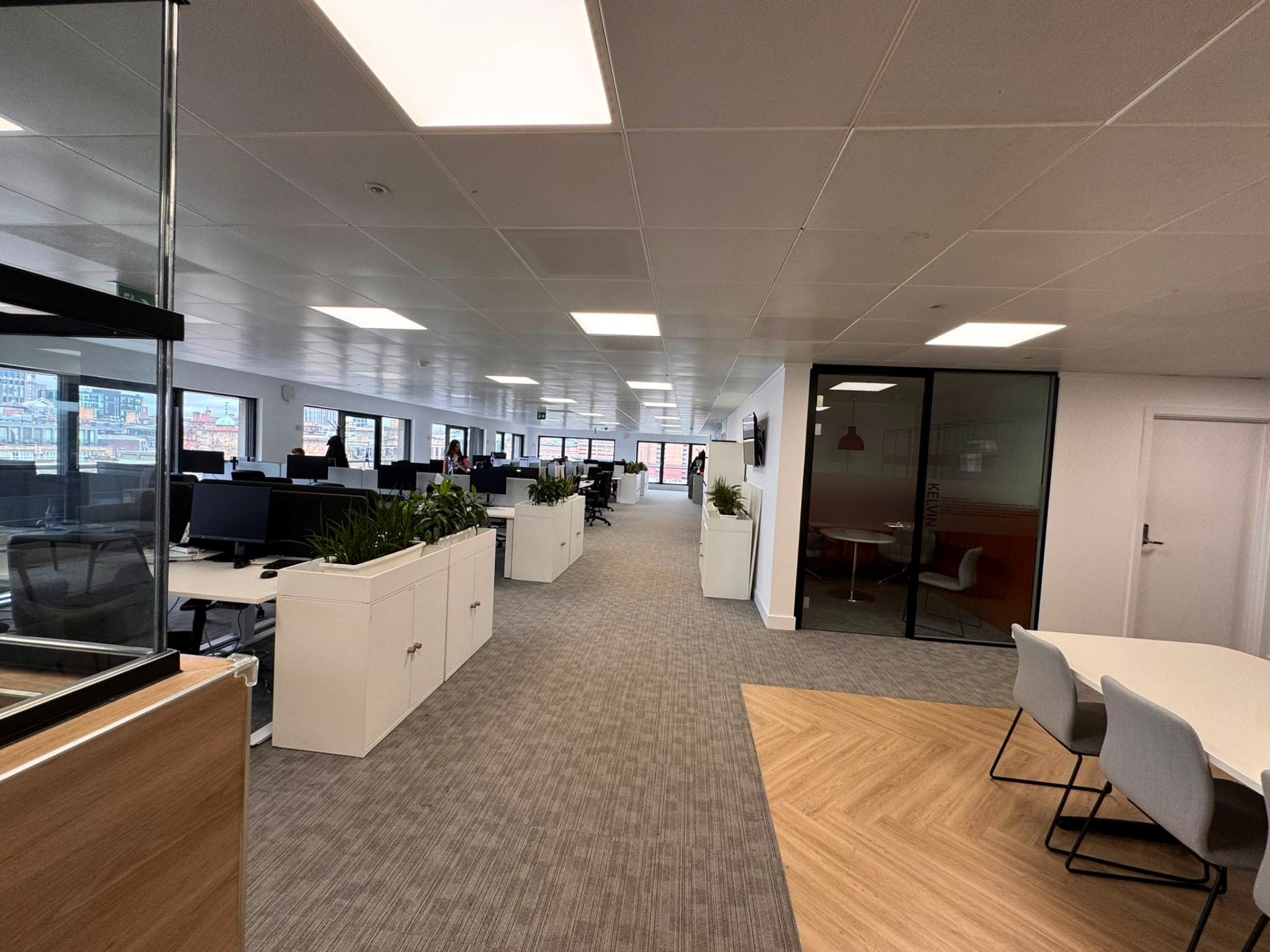
Fire Check Scotland assessed an upper-floor office tenant demise within a larger multi-occupied building. The office was generally well maintained, but the tenant still needed clear local responsibilities and landlord/building-management interface information.
The Premises
- Upper-floor office tenant demise.
- Open-plan office, meeting and welfare areas.
- Multi-occupied building with landlord-controlled common systems.
- Staff, visitors, contractors and occasional events.
- No sleeping accommodation.
Why This Project Was More Complex
The office tenant could control local housekeeping, training, visitor management and defect reporting, but relied on landlord/building management for common fire alarm, emergency lighting, smoke control, refuge and common escape arrangements.
Key Technical Themes
- Tenant-demise scope and landlord interface.
- Rear stair-access door self-closing/latching defect.
- Service/storage cupboard compartmentation and fire-door status.
- Local fire-safety coordinator, fire marshals and drills.
- Visitor, contractor and assisted-evacuation arrangements.
- PAT, kitchen controls and routine checks.
Fire Check Scotland Approach
The assessment avoided turning a tenant FRA into a whole-building sign-off. It focused on the tenant's local controls while identifying the building information the tenant needed to request and retain.
Outcome
The client received a practical tenant action plan for local management, door/cupboard issues, visitor control, training, records and landlord interface evidence.
Relevance to Similar Clients
Relevant to office tenants in multi-occupied buildings, managed offices and businesses that rely on landlord-controlled fire-safety systems.