What Actually Counts as a 'Competent Person' Under the Fire (Scotland) Act 2005?
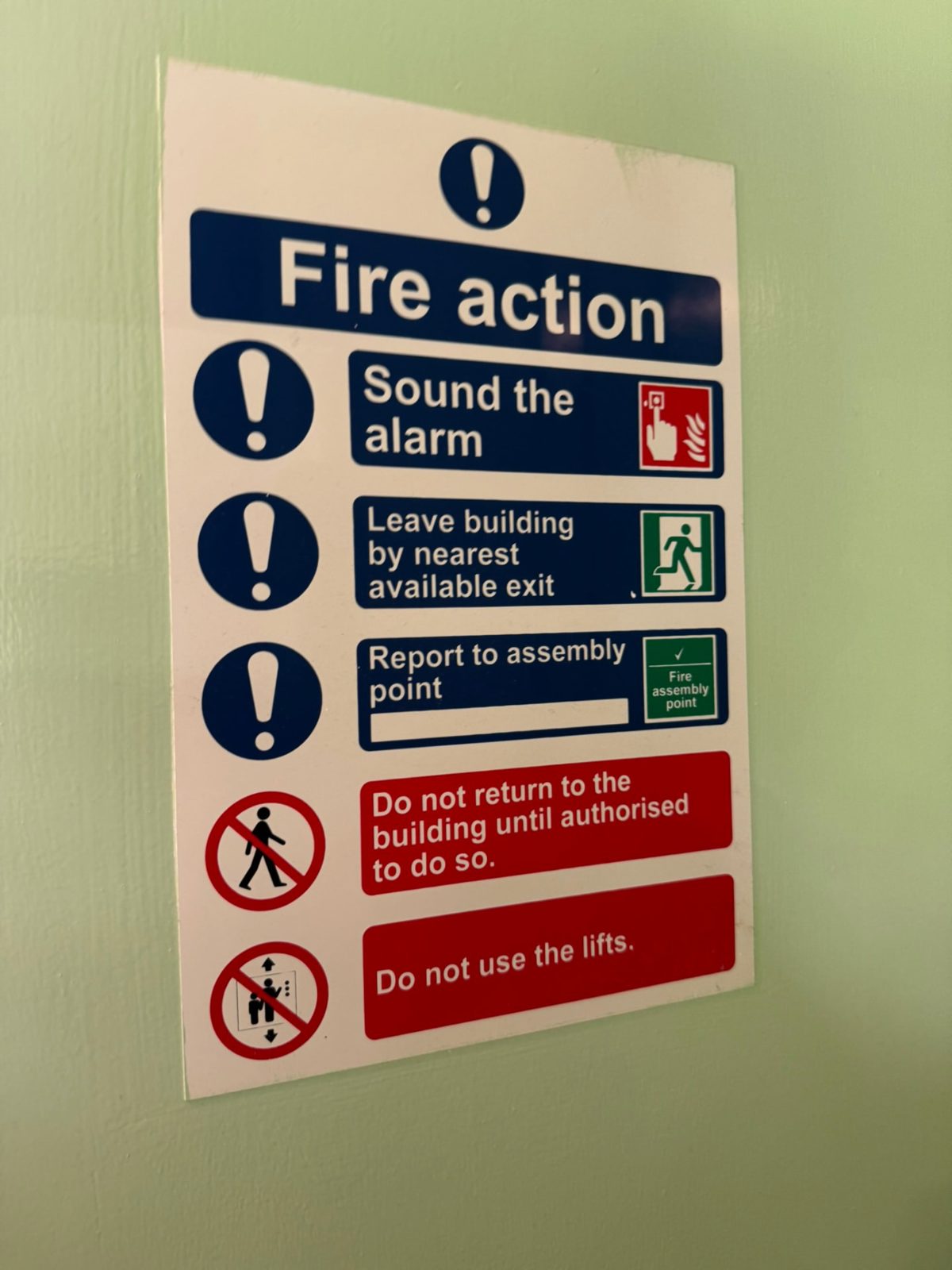
We get this question a lot, especially from people running serviced accommodation and Airbnb-style lets: "Can I just do the Fire Risk Assessment myself?"
Technically — yes. Legally — only if you actually qualify as a "competent person." And that term has a specific legal meaning that most people assume they meet, without checking.
Who the law actually places the duty on
Under Sections 53 and 54 of the Fire (Scotland) Act 2005, the duty to carry out a fire risk assessment sits with whoever has control of the premises — this includes employers, and anyone in control of the premises in connection with running a trade, business, or other undertaking, including owners and, in some cases, landlords. The Act itself doesn't use the phrase "responsible person" (that's the equivalent term used in England and Wales) — in Scotland it's simply the person in control of the premises.
That person doesn't legally have to bring in an external assessor. They can carry out their own assessment, provided they meet the legal definition of a "competent person" set out in the Fire Safety (Scotland) Regulations 2006. That's where most self-assessments quietly fall apart.
What the regulations actually say
Regulation 17(1) of the Fire Safety (Scotland) Regulations 2006 sets out that a competent person is someone with sufficient training, and sufficient experience or knowledge, and other qualities, to properly carry out the assessment for that specific premises. It's not a fixed checklist or a qualification you either have or don't — it's judged against the complexity of the actual building being assessed.
What "competent" actually means in practice
Competence isn't a feeling of confidence, and it isn't having read a checklist online. It means having the genuine knowledge, training, and experience to properly identify fire hazards in a specific building, understand how fire spreads and how escape routes actually function under pressure, and correctly judge whether existing precautions are adequate for that particular premises and its occupants.
This is exactly why professional assessors go through recognised training and accreditation (such as IFSM or equivalent bodies) — not as a box-ticking qualification, but because fire behaviour, building construction, and occupant risk genuinely require specialist knowledge to assess properly. Things like how a fire door's rating interacts with the layout of a corridor, how travel distances are calculated, or how smoke moves through a stairwell aren't things most business owners have any training in — and there's no shame in that. It's a specialist skill, the same way you wouldn't expect a fire risk assessor to properly value a property portfolio or rewire a consumer unit.
Why this matters so much for Airbnb and serviced accommodation owners
We're seeing this gap most often in serviced accommodation and short-let properties. A lot of hosts assume that because they know their own property well, they're qualified to assess it. Knowing your building isn't the same as knowing fire risk.
The stakes here are also higher than people expect. Guests are unfamiliar with the property, often sleeping, and won't know the layout in an emergency the way a resident would — which is precisely why hospitality-type premises carry a higher risk classification under the law. A DIY assessment that misses something in this context isn't a paperwork failure. It's a real safety gap, for real people staying overnight in your property.
The liability doesn't go away — it just gets riskier
Here's the part that catches people out. If you carry out your own assessment and you're later found not to have genuinely met the competent person standard under Regulation 17(1), that doesn't reduce your liability as the person in control of the premises — it increases it. You're not just found to have an inadequate assessment; you're the person who signed off on one, believing yourself qualified when the law says you weren't. That's a considerably worse position to be in if the fire service or an insurer ever asks to see it, or if something goes wrong.
The honest answer to "can I do it myself?"
If you're confident you genuinely meet the competent person standard — real training and experience in fire risk assessment specifically, not just familiarity with your own building — the law doesn't stop you doing your own. If you don't — and most property owners, hosts, and landlords don't, because it's not their profession — the honestly safer and often cheaper-in-the-long-run option is to bring in someone who is.
Fire Check Scotland's assessments are carried out by trained, accredited assessors — not a generic checklist with your address on it. If you're currently relying on a self-assessment and you're not entirely sure it would hold up, get in touch and we'll tell you honestly where you stand.
Need clarity on your compliance position?
Speak to Fire Check Scotland for a straightforward, no-obligation conversation about your property.
Book a Fire Safety Consultation